
Misdirection
“... let not thy left hand know what thy right hand doeth.” Matthew 6:3 KJV

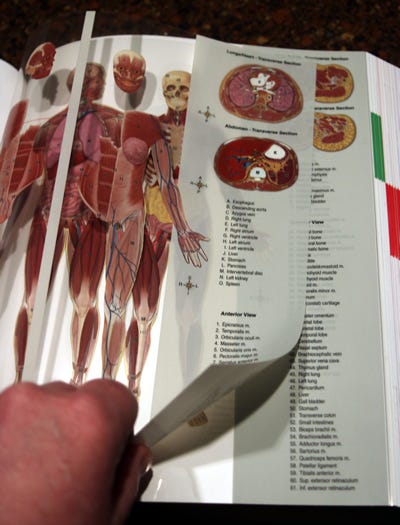
I never thought that I would write an essay about my high school biology book. Nevertheless, I am going to begin this blog by recalling a particular feature of that doorstop text. Buried within the leaves of the largely unread tome were several clear-plastic pages with colorful pictures imprinted upon them. The page that preceded the color leaves of plastic was a normal paper sheet with a silhouette of the human body. Each of the succeeding transparencies had imprinted upon them the design of one of the body’s systems. The series of pages was organized so that a student could overlay one of the major systems atop the others in order to visualize how they all interacted. I never fully comprehended what these pages were meant to reveal but I thought the idea was really interesting.
The design of textbooks with overlaying pages came to mind as I was thinking about Lincoln and the Emancipation Proclamation. I believe that in our efforts to make history accessible to a broad audience we tend to strip it down to the “skeletal system” of important events. For example, most people know (I hope) that Lincoln issued the Emancipation Proclamation and they therefore think he freed the slaves. But this skeletal narrative leaves so much out of the story and, in fact, opens Lincoln to unjust criticism. It also leaves us with an impression that presidents can just make decisions on their own without concern for legal and moral considerations or how those decisions may affect the behavior of people around them.
Lincoln understood the complexity of the situation he confronted in early 1861. To him, holding Kentucky to the Union cause was paramount. Within a few days of the Civil War’s outbreak, however, it was obvious that something would have to be done to address the effect war would have on the enslaved people and on the supporters of slavery who still remained loyal. The president had to decide how he could balance these contrasting interests. His task was to not only implement policy but to prepare the nation for changes the war would initiate.
James Speed, like his brother Joshua, was working to maintain Kentucky’s loyalty. James had served as the pro-Union commander of Louisville’s Home Guard militia through the early days of the crisis. He was then chosen by constituents in Louisville to participate in a “peace convention” being held in Louisville in August, 1861. Speed was appointed chairman of that convention whereupon pro-Southern members left the meeting in protest of the election of a Unionist leader.
That August, James was also elected to the Kentucky Senate. In the legislature, Speed put forward a bill that would have liberated the enslaved of any Confederate supporter in the Commonwealth. Additionally, the legislation provided for state funded compensation to free all Kentucky slaves. This plan would have potentially gone further to end slavery in Kentucky than anything Fremont had proposed to do in Missouri. The main difference was, of course, the action would have been taken by the state government and not the federal government. Speed’s proposal fell largely on deaf ears. James would not accept federal actions to end slavery until 1864 when he finally altered his views.
Though it is hard to perceive today, the march toward the Emancipation Proclamation was proceeding more rapidly than anyone would have imagined before the war. In August 1861 and again in July 1862 Congress passed laws allowing the army to confiscate “human property” belonging to those supporting the rebel cause. The Second Confiscation Act had not only included freedom for all slaves held by Confederate sympathizers but also allowed for the arming of freed people to suppress the rebellion. Congress had abolished slavery in the District of Columbia in April and in all federal territories in June.
In November, 1861, just seven months after the outbreak of war, the U.S. military had captured the Sea Islands off the coast of South Carolina. In Beaufort, the federal authorities began the “Port Royal Experiment” where former slaves, military leaders, government officials, abolitionists, and teachers began to implement a plan that was viewed as a possible model for reconstructing the South after the war.
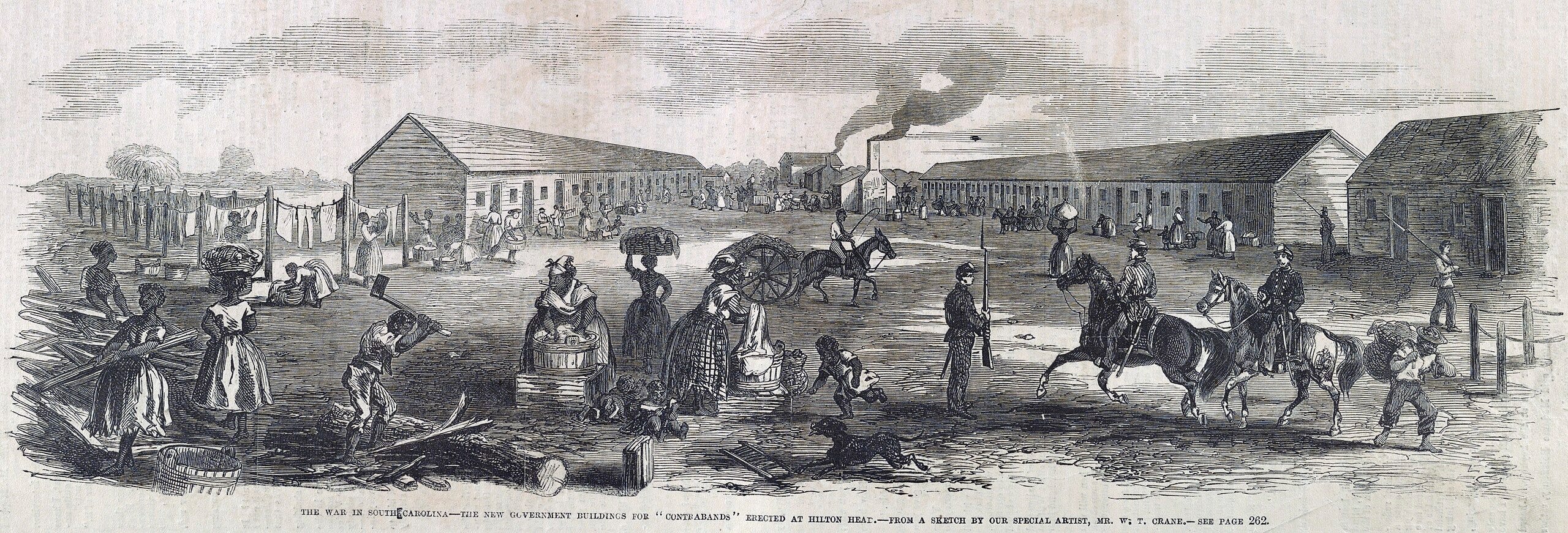
These are only some of the actions taken by congress and the Union military to move toward full emancipation of the enslaved. Yet, Lincoln was (and still is) often criticized for his measured steps attacking the institution that was vital to the southern war effort. And, while so much was being done by others to end slavery, the president seemed inconsistent in his actions. Lincoln rescinded a second emancipation edict issued by a general, David Hunter, in South Carolina. He continued to push for compensated emancipation and the colonization of freed people in areas outside the United States. He infamously met with a group of African American ministers in the White House where he told them that their presence in the nation was the reason for the war. Then, he proceeded to pressure the ministers for an endorsement of his colonization plan. The clergy failed to comply.
Even more disconcerting was Lincoln’s letter to Horace Greeley, owner, editor, and publisher of the New York Tribune newspaper. Greeley had been an early advocate for Lincoln’s nomination at the 1860 Republican Convention. He was thought to be one of Lincoln’s staunchest supporters, In the summer of 1862 Greeley published an editorial highly critical of Lincoln’s policy, or lack of policy, in bringing about the liberation of the enslaved.
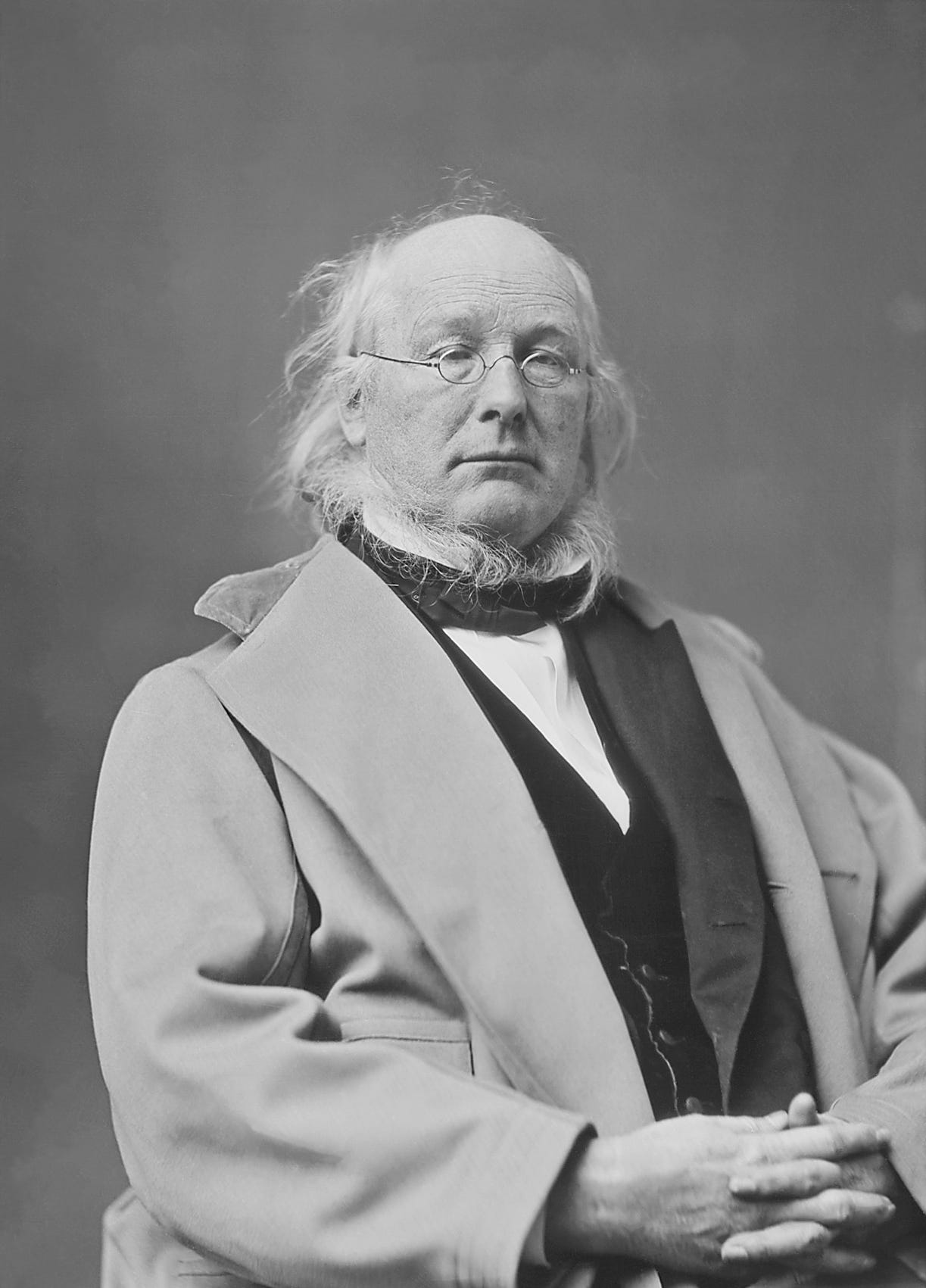
Lincoln’s response to Greeley was less than satisfactory to those who agreed with the publisher.
“My paramount object in this struggle is to save the Union, and is not either to save or to destroy slavery. If I could save the Union without freeing any slave, I would do it, and if I could save it by freeing all the slaves I would do it; and if I could save it by freeing some and leaving others alone I would also do that. What I do about slavery, and the colored race, I do because it helps to save the Union; and what I forbear, I forbear because I do not believe it would help to save the Union.”
This was music to the ears of slaveholding Kentucky Unionists. But, while he was meeting with the African American ministers and writing a response to Greeley, Lincoln had been working on a draft of the Emancipation Proclamation.
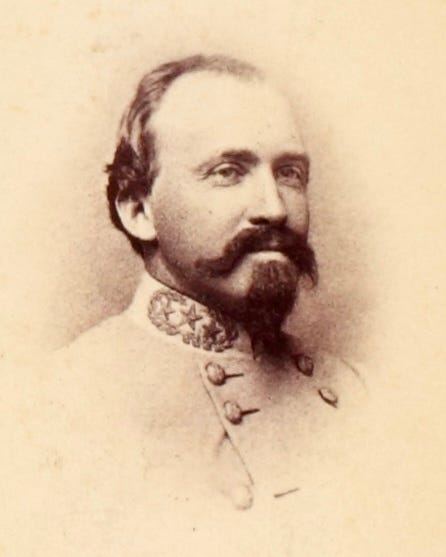
Meanwhile, Joshua and James Speed were continuing to support Lincoln’s efforts to maintain Kentucky’s loyalty to the Union. Lincoln truly believed that losing Kentucky to the rebel side was tantamount to losing the war. Perhaps he had decided that the situation demanded some political misdirection and cover from the chief executive allowing others to do the groundwork for what would come. By late summer 1862, Confederate cavalry, led by Kentuckian John Hunt Morgan, was rampaging through the state. Morgan was reporting to his superiors that if provided with the rifles, he could arm enough men from his native state to give the rebels an edge in winning the war. The Speeds, their allies, and the Union army had not yet secured Kentucky’s permanent loyalty to the Union.
Until next time, my best to you and yours.
David
Injustice anywhere is a threat to justice everywhere. MLK. Jr.
A very useful timeline of the events leading to the Emancipation Proclamation can be found at: https://www.loc.gov/collections/abraham-lincoln-papers/articles-and-essays/abraham-lincoln-and-emancipation/timeline/
Semper Eadem: An Interpretation of the Life of James Speed by Jennifer Cole provided me with information about James Speed’s activities during these turbulent early days of the war.
The Union Cause in Kentucky by Thomas Speed has a wealth of information about the men who helped to save Kentucky for the Union. It can be freely accessed at The Union Cause in Kentucky, 1860-1865 : Speed, Thos. (Thomas), 1841-1906 : Free Download, Borrow, and Streaming : Internet Archive .
The Register of the Kentucky Historical Society published the article “Joshua Fry Speed: Lincoln’s Confidential Agent in Kentucky” by Robert L. Kincaid. It can be found at JOSHUA FRY SPEED: Lincoln’s Confidential Agent in Kentucky on JSTOR
👍👍
Lincoln's quote was an eye opener for me. Nonetheless, he wrote and delivered the Emancipation Proclamation, so there is that. Bob Brown