
Construction
How was the house at Farmington built?

“That is the story of this country, the story that has brought me to this stage tonight, the story of generations of people who felt the lash of bondage, the shame of servitude, the sting of segregation, but who kept on striving and hoping and doing what needed to be done so that today I wake up every morning in a house that was built by slaves.” —-Michelle Obama, 2016
When Michelle Obama uttered these words at the Democratic Convention of 2016 she was attempting to stir the soul of America. Her words, though, roused a great deal of controversy. I am not sure why. Much of the construction of any southern house like the White House, or Monticello (the home of Thomas Jefferson), or Mount Vernon (the home of George Washington), or Farmington would have been done by enslaved labor. I would have thought that by the twenty-first century all of this would have been obvious – recognized by most of us.
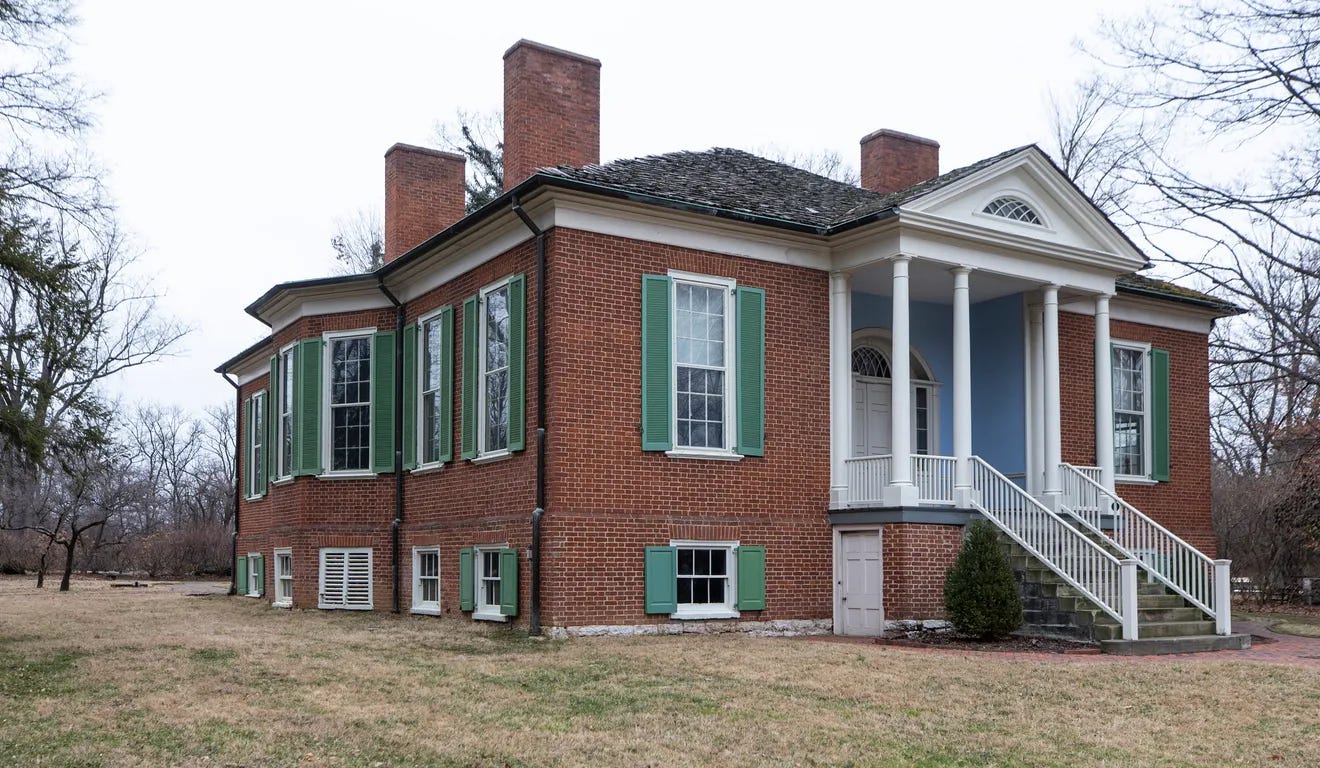
In today’s world it is difficult to imagine the work that went into constructing the Speed’s home at Farmington. No doubt, John and Lucy had already determined a location for the house on the knoll overlooking the spring that ran south of their property facing Bardstown Turnpike. Natural lighting of the rooms would have been a major consideration in positioning the house. In the time before electricity and when candles were a valued commodity it was important that positioning of the house allowed for the capture of light. Catching cooling breezes would also have been a primary goal. Paul Skidmore, the designer and engineer for the project, would have probably calculated the best way to accommodate these concerns. Robert Nicholson, the man hired to oversee the construction of the house, would have carried out the plans and determined the finishing details.
At the time the house was built John Speed held about twenty people in bondage. It is likely, though not a certainty, that he leased additional laborers from nearby property owners so that the work and farming could both proceed during the months it took to build the house. Additionally, Speed probably hired some white artisans or leased skilled enslaved craftsmen to complete specialized jobs or do the intricate finishing work like carvings on mantels.
The result of the work was a fourteen room, 6,080 square foot house that was the centerpiece of the property. It was home to the family of John and Lucy Speed. It also was a building that would last through time giving us an artifact with which to gain an understanding of our past.
As much as possible Nicholson used construction material found on the property of Farmington. The foundation of the house is made of stone that was most likely located nearby. Even if close to the house the stone had to be quarried and fitted by the enslaved laborers.
The work done in framing the house is most evident in the attic. The rafters which support the roof were made of hand hewn wood. To make the beams, rafters, and other wooden boards needed in construction, a large pit would have been dug near the construction site. Scaffolding would have been prepared over the pit and trees would have been laid across so that a two-person whipsaw could be used to manufacture the planks and beams. The trees, of course, would, most likely, have been felled and dragged to the pit by teams of horses.
It is even more astounding to think about the production of the bricks. It is impossible to even conceive of how many bricks were used to construct the house. From just above ground level, the house is made entirely of bricks – even the interior walls. The outside walls are four bricks thick up to the “water course” to help prevent water from seeping into the house in the wet seasons. Above that line, the walls are three bricks thick.
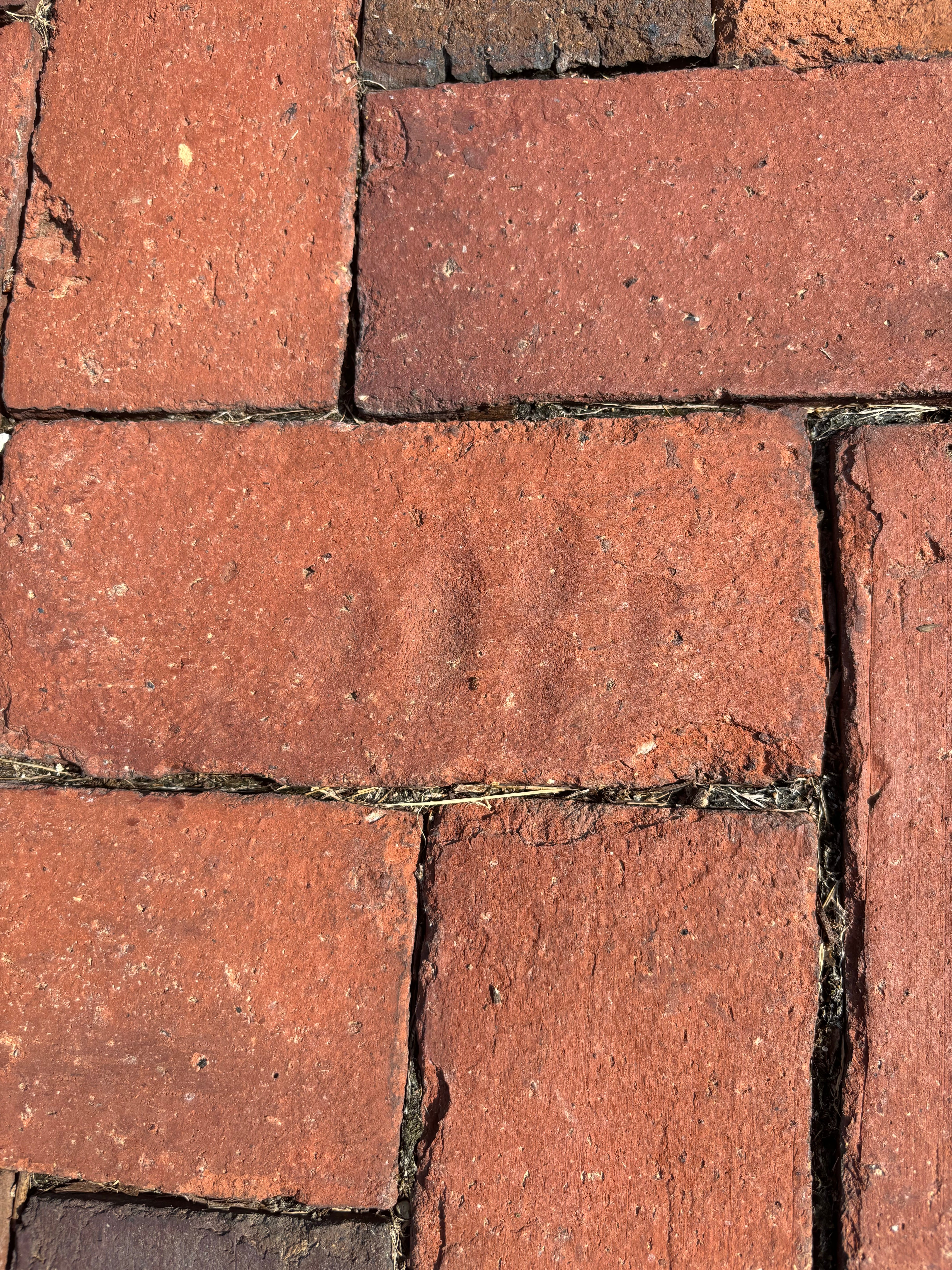
Evidence found in the way the bricks were manufactured suggests that they were made at Farmington though there were brick-making factories in Louisville from which they could have been purchased. In either case, the bricks were produced by the hands of enslaved labor as both the factories in the city or the Speeds at Farmington would have used men in bondage to manufacture the bricks. If produced on the property, enslaved laborers would have been responsible for digging the clay and firing the bricks. Interestingly, bricks with fingerprints imprinted in them can still be found today at Farmington. In all likelihood these are fingerprints left by enslaved workers.
The interior walls were covered with a coat of plaster made from limestone, mud, hemp, and hair probably produced by the people on the plantation. This concoction was placed on the brick then covered with a smooth plaster which was painted.
Probably, the only materials used in constructing the house that could not be produced on the property were the glass for the windows and the brass locks. The glass was most likely shipped to Louisville from Pittsburgh by way of the Ohio River. Then it was brought to Farmington to be placed in the windows. The brass locks were purchased in England.
The Speeds finished the house in style. A painter stippled the baseboards and door frames to create an effect that appears to be marble. The doors, made from the wood of trees on the property, were “grained” so they appeared to be made from oak. Walls were painted with bright colors and adorned with “wall hangings” in the style of the day. Lucy would have been sure to make the house appear fashionable but it was also designed to be comfortable and accommodating for a large, growing family.
The house at Farmington was a home for the Speed family. In a previous essay, I noted that John and Lucy Speed also intended to build a house they believed would be a monument to the American idea of democracy. But, it is also important to note that the house John and Lucy and their children called home was built, at least, in part, by the hands of people that were enslaved.
Until next time, my best to you and yours,
David
“Injustice anywhere is a threat to justice everywhere.” MLK, Jr.
The quote from Michelle Obama comes from an article in Time Magazine, July 25, 2026. It can be found online at Read Michelle Obama’s Emotional Speech at the Democratic Convention
A Youtube demonstration of how boards and planks were made using a saw pit can be found here
.
Former Executive Directors Carolyn Brooks and Kathy Nichols both provided information and advice in creating this essay. Thank you both for all you do to help me avoid unfactual information.
A document used at Farmington in docent training entitled “The House and Its Dependencies” was also used in gathering information about how the house was built and who did the labor. Thanks to Michael Aldridge, the current Executive Director at Farmington for making sure I had access to that document.
Thanks for insights on how Farmington was built. Even today, building a hip roofed house is considered skilled carpentry. For 210 years the roof and house at Farmington has been battered by the elements and the structure is still sound. That’s a testament to the skill of all the builders, including the enslaved.